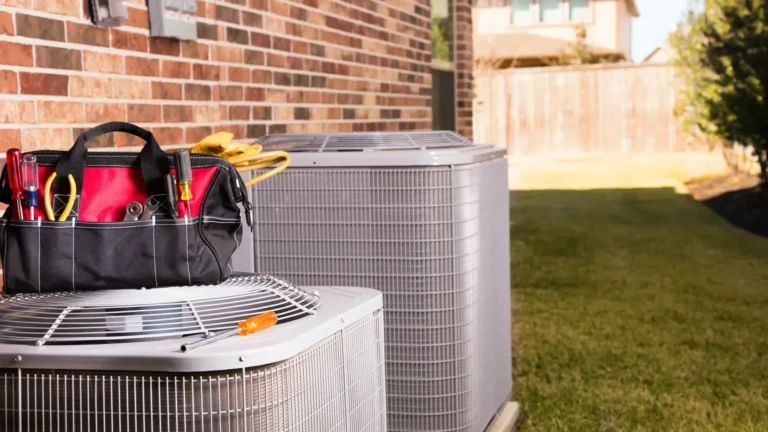
HVAC Solutions for Warehouses in North Houston, TX
Warehouses present some of the most demanding HVAC challenges in the commercial sector. With expansive open floor plans, high ceilings often exceeding 30 feet, large loading dock doors that cycle open and close throughout the day, and significant heat loads from equipment and lighting, maintaining comfortable and functional temperatures requires specialized expertise. At ATS Mechanical Heating & AC, we bring 31 years of air conditioning and heating knowledge to every warehouse project, serving both residential and commercial customers with solutions that prioritize efficiency, reliability, and long-term performance.
The warehouse and distribution center market has grown exponentially in recent years, driven by the expansion of e-commerce and supply chain logistics. According to industry data, the average warehouse in the United States spans approximately 180,000 square feet, though many facilities in the greater Cypress, Klein, Spring, The Woodlands, and Tomball, TX area range from modest 10,000-square-foot storage buildings to massive distribution hubs exceeding 500,000 square feet. Regardless of size, every warehouse requires a carefully designed HVAC strategy that accounts for the unique demands of the space, the products stored within, and the people working inside.
Understanding Warehouse Climate Control Challenges
Unlike standard commercial buildings, warehouses rarely benefit from the insulation and compartmentalization that make traditional HVAC systems effective. The sheer volume of air inside a warehouse means that heating or cooling the entire space uniformly can be both impractical and prohibitively expensive. Thermal stratification is one of the most common issues we encounter, where hot air rises to the ceiling and cool air settles near the floor. In summer months, temperatures near the roof deck can exceed 150 degrees Fahrenheit, creating a radiant heat effect that makes the entire facility uncomfortable and potentially dangerous for workers.
Loading dock operations compound these challenges significantly. Every time a bay door opens, conditioned air escapes and outside air floods in. In the Texas climate, where summer temperatures regularly exceed 95 degrees with high humidity, a single open dock door can compromise the climate control of a substantial portion of the warehouse within minutes. Our team designs HVAC systems that account for these air exchanges, incorporating strategies like air curtains, vestibule configurations, and rapid-recovery heating and cooling equipment that restores setpoint temperatures quickly after disruptions.
Our Approach to Warehouse HVAC Design and Installation
We take a methodical approach to every warehouse HVAC project, beginning with a comprehensive assessment of the facility. This evaluation examines the building envelope, insulation levels, roof type and color, square footage, ceiling height, occupancy patterns, equipment heat loads, and the specific requirements of stored goods. Temperature-sensitive inventory such as pharmaceuticals, food products, electronics, and chemicals each demand different environmental controls, and our AC installation services are tailored to meet those exact specifications.
Our team evaluates several system types during the design phase to determine the optimal solution for each warehouse. The 200 hours of training our employees go through each year keeps us sharp and updated with the newest technologies from all manufacturers, ensuring we recommend the most current and effective equipment available. Common warehouse HVAC configurations we install and service include:
- Rooftop units (RTUs) that deliver conditioned air through ductwork suspended from the ceiling structure, ideal for facilities with limited floor space
- Destratification fan systems that push warm air trapped at the ceiling back down to the occupied zone, reducing heating costs by as much as 30 percent
- Radiant heating systems that warm people and objects directly rather than heating the air, making them highly efficient for facilities with frequent door openings
- Evaporative cooling systems that provide cost-effective temperature reduction in hot, dry conditions and work well in semi-open environments
- Make-up air units that replace exhausted air while maintaining building pressure and indoor air quality standards
Energy Efficiency and Cost Management
Energy consumption represents one of the largest operational expenses for warehouse operators. HVAC systems can account for 30 to 50 percent of total energy costs in climate-controlled warehouses, making efficiency a top priority. We help our clients in Cypress, Klein, Spring, The Woodlands, and Tomball, TX reduce those costs through smart system design, proper equipment sizing, and advanced control strategies. An oversized system wastes energy through short cycling, while an undersized system runs continuously without achieving desired temperatures. Precision load calculations are essential, and our engineering approach ensures every system is matched to its specific application.
Programmable thermostats and building automation systems allow warehouse managers to schedule temperature setbacks during unoccupied hours, zone different areas of the facility independently, and monitor system performance in real time. We install and configure these controls to maximize savings while maintaining compliance with OSHA guidelines for workplace temperatures. Variable frequency drives on fan motors and compressors further reduce energy consumption by matching system output to actual demand rather than running at full capacity continuously.
Warehouse HVAC Repair and Preventive Maintenance
Equipment downtime in a warehouse environment can have cascading consequences, from worker discomfort and reduced productivity to spoiled inventory worth hundreds of thousands of dollars. Our HVAC repair services are designed to respond quickly and resolve issues efficiently. As North Houston’s most trusted HVAC repair and replacement service, we understand that warehouse operations rarely stop, and neither should the climate control systems that support them.
Preventive maintenance is the single most effective strategy for avoiding unexpected breakdowns. Our maintenance programs for warehouse clients include:
- Quarterly inspections of all rooftop units, including coil cleaning, refrigerant level checks, and electrical connection tightening
- Belt and filter replacement on a scheduled basis to maintain airflow and prevent strain on motors and compressors
- Ductwork inspection and sealing to address leaks that can waste up to 25 percent of conditioned air before it reaches the occupied space
- Thermostat calibration and control system updates to ensure accurate temperature regulation throughout the facility
Regular maintenance extends equipment lifespan, maintains manufacturer warranty coverage, and keeps energy costs predictable. For warehouses running multiple rooftop units, even a small efficiency loss in each unit compounds into significant waste across the facility. We track performance metrics over time so we can identify degradation trends before they result in system failure.
Specialized Applications and Future Trends
Cold storage warehouses and temperature-controlled distribution centers represent a specialized segment where precision is critical. These facilities often maintain temperatures ranging from negative 20 degrees Fahrenheit for frozen goods to 55 degrees for produce and floral storage. The refrigeration and HVAC systems in these environments must work in concert, and our commercial experience allows us to coordinate these complex installations from initial design through commissioning and ongoing service.
Looking ahead, warehouse HVAC technology is evolving rapidly. Variable refrigerant flow systems are gaining traction in warehouse applications due to their ability to heat and cool different zones simultaneously with remarkable efficiency. Heat recovery ventilation systems capture energy from exhaust air and transfer it to incoming fresh air, reducing the load on primary heating and cooling equipment. Smart sensors and Internet of Things connectivity enable predictive maintenance, where the system itself alerts facility managers to developing issues before they become failures.
At ATS Mechanical Heating & AC, we are committed to staying at the forefront of these developments. Our extensive annual training ensures that every technician on our team can install, diagnose, and service the latest warehouse HVAC technologies. Whether you operate a small storage facility or a major distribution center in Cypress, Klein, Spring, The Woodlands, and Tomball, TX, we deliver the expertise, equipment, and ongoing support needed to keep your warehouse comfortable, compliant, and cost-effective year-round. This knowledge serves our existing and future customers well in our ability to make them comfortable across every type of project we take on.