How Professional HVAC Inspections Can Identify Hidden Safety Hazards in Homes with Children, Elderly Residents, and Pets
Your home should be the safest place for every member of your family, whether they walk on two legs or four. Yet many of the most dangerous hazards lurking in residential properties are completely invisible to the untrained eye. At ATS Mechanical Heating & AC, we understand that families in Cypress, TX, Klein, TX, Spring, TX, The Woodlands, TX, and Tomball, TX rely on their heating and air conditioning systems to keep vulnerable household members safe and comfortable. With 31 years of air conditioning and heating knowledge serving both residential and commercial customers, we have seen firsthand how routine professional inspections uncover threats that homeowners never knew existed.
According to the Consumer Product Safety Commission, carbon monoxide poisoning sends more than 50,000 Americans to the emergency room each year. The National Fire Protection Association reports that heating equipment is the second leading cause of home fires in the United States. These statistics are alarming on their own, but they become even more urgent when you consider households with children under five, adults over 65, or pets, all of whom are more physiologically susceptible to airborne toxins, temperature extremes, and environmental hazards.
Carbon Monoxide and Combustion Gas Leaks
Carbon monoxide is an odorless, colorless gas that can be produced by malfunctioning furnaces, cracked heat exchangers, and improperly vented gas appliances. Young children and elderly residents absorb carbon monoxide more rapidly than healthy adults, meaning even low-level exposure can produce symptoms like headaches, confusion, and nausea before a standard household detector triggers an alarm. Pets, particularly birds and small animals, are extraordinarily sensitive to air quality changes and can be affected at concentrations far below human detection thresholds.
During a professional heater repair or inspection appointment, our technicians use calibrated combustion analyzers to measure carbon monoxide levels at the source, inside supply ducts, and throughout the living space. We inspect heat exchangers using specialized cameras and pressure testing to identify microscopic cracks that allow combustion gases to mix with conditioned air. The 200 hours of training our employees go through each year keeps us sharp and updated with the newest technologies from all manufacturers, ensuring we catch problems that less experienced technicians might miss entirely.
Electrical Hazards and Fire Risks
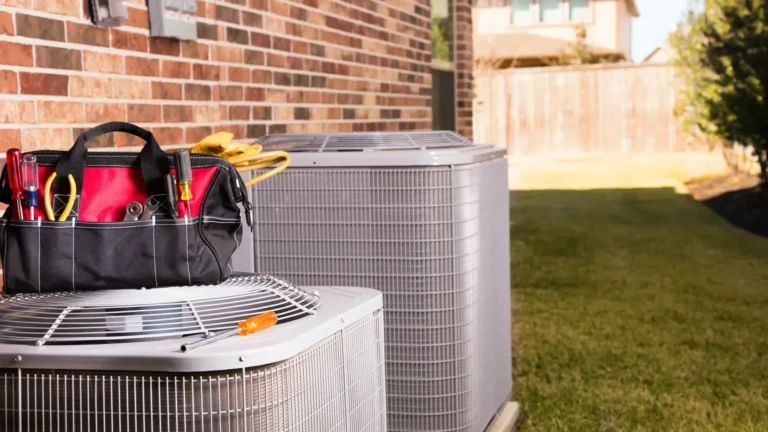
HVAC systems require significant electrical power, and over time, wiring connections can loosen, capacitors can fail, and contactors can arc. These conditions create real fire risks, especially in attics and crawlspaces where insulation can ignite. In homes with curious toddlers or pets that chew on accessible wiring, the danger multiplies. Outdoor AC units present additional risks when children or pets interact with exposed electrical components, damaged condenser fan guards, or deteriorating refrigerant lines.
Our AC repair and air conditioning service inspections include thorough evaluation of all electrical connections, amperage draws, and component integrity. We check for scorching on wiring insulation, verify breaker sizing, and test safety disconnect switches to make sure they function properly. We also assess the physical condition of indoor and outdoor equipment housings, recommending protective barriers or covers when units are accessible to children or animals.
Indoor Air Quality and Respiratory Health
Poor indoor air quality disproportionately affects vulnerable populations. Children breathe faster than adults relative to their body weight, elderly individuals often have compromised respiratory systems, and pets living close to the ground inhale higher concentrations of settled particulates. Mold growth inside ductwork, dirty evaporator coils, and clogged drain lines create environments where biological contaminants thrive and circulate throughout the home.
Our inspections evaluate every component that influences air quality, including the following critical checkpoints:
- Evaporator coil condition to detect mold, bacterial growth, and restricted airflow that forces the system to work harder and circulate contaminants
- Condensate drain line integrity to prevent standing water that breeds mold and attracts pests
- Ductwork inspection to identify gaps, disconnections, or contamination pulling pollutants from attics and crawlspaces into living areas
- Filter assessment to verify proper sizing and replacement schedules that maintain healthy particulate capture rates
- Refrigerant levels to ensure no leaks expose household members to chemical irritants
Temperature Regulation Failures
Infants, elderly residents, and many pet breeds cannot regulate body temperature effectively. A heating system that fails during a Texas cold snap or an air conditioning system that stops cooling during July can create life-threatening conditions within hours. Professional inspections identify components nearing failure before they break down entirely.
We test thermostat accuracy, verify proper system cycling, and measure temperature differentials across the system to confirm everything operates within manufacturer specifications. This knowledge serves our existing and future customers well in our ability to make them comfortable and, more importantly, safe. Scheduling regular professional inspections with ATS Mechanical Heating & AC is one of the most effective steps you can take to protect every member of your household from hidden dangers.