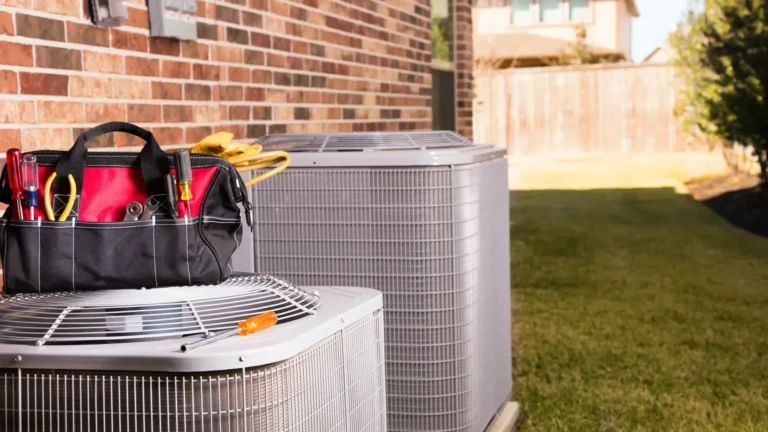
HVAC Solutions for Department Stores
Department stores present some of the most complex and demanding commercial HVAC challenges. With sprawling floor plans that often exceed 100,000 square feet, multiple levels, high ceilings, constantly opening entrance doors, and fluctuating occupancy levels throughout the day, these retail environments require carefully engineered climate control systems that balance comfort, energy efficiency, and operational cost. At ATS Mechanical Heating & AC, we bring 31 years of air conditioning and heating knowledge to bear on these exact challenges, serving commercial customers across Cypress, TX, Klein, TX, Spring, TX, The Woodlands, TX, and Tomball, TX with solutions designed specifically for large-scale retail environments.
The department store industry in the United States generates hundreds of billions of dollars annually, and customer experience is central to sustaining revenue. Studies consistently show that indoor climate directly affects how long shoppers remain in a store and how much they spend. When temperatures drift even a few degrees outside the comfort zone, dwell time decreases and conversion rates drop. That makes HVAC not just a facilities concern but a genuine business strategy for department store operators throughout North Houston and beyond.
Understanding the Unique Climate Demands of Department Stores
Unlike a typical office building or small retail shop, a department store has distinct zones that each require different climate considerations. Cosmetics and fragrance counters benefit from slightly cooler temperatures and enhanced ventilation to manage airborne particulates. Clothing sections need stable humidity levels to protect merchandise and prevent static buildup. Electronics departments generate internal heat loads from display units and lighting that must be offset. Food courts or in-store cafes introduce grease-laden air and cooking heat that require dedicated exhaust and makeup air systems. Each of these zones must function harmoniously within a single building envelope.
The challenge intensifies during peak shopping seasons. Holiday rushes can double or triple the normal occupancy of a department store, dramatically increasing the internal heat load from body heat alone. A single person generates approximately 400 BTUs per hour of sensible heat, meaning a store with 2,000 holiday shoppers is adding nearly 800,000 BTUs of heat that the cooling system must address. Our team designs and maintains systems capable of responding dynamically to these swings, ensuring comfort whether the store has 200 or 2,000 occupants at any given time.
System Design and Equipment Selection
Large department stores typically rely on rooftop units, variable air volume systems, or chilled water plants depending on the building’s size, age, and geographic climate conditions. In the North Houston area, where summer temperatures routinely exceed 95 degrees and humidity levels remain high for months at a time, the cooling load calculations require particular precision. We factor in solar heat gain through large storefront windows, heat generated by extensive lighting systems, and the infiltration of hot, humid outdoor air through frequently used entrances.
Variable refrigerant flow technology has become increasingly popular in department store applications because it allows different zones to be heated or cooled simultaneously from a single outdoor condensing unit. This is particularly useful in stores where perimeter zones near glass walls may need cooling while interior stockrooms need less conditioning. The 200 hours of training our employees go through each year keeps us sharp and updated with the newest technologies from all manufacturers, ensuring we can recommend, install, and service the most current systems available.
Key Considerations for Department Store HVAC
When we evaluate or design an HVAC system for a department store, several critical factors guide our approach. Each of these elements plays a role in system performance, energy consumption, and occupant comfort over the life of the installation.
- Zoning and controls strategy allows different sections of the store to maintain independent temperature and humidity setpoints, which is essential when merchandise requirements vary across departments
- Air filtration and indoor air quality must account for high foot traffic, cosmetic aerosols, and off-gassing from new merchandise, requiring MERV-rated filters and potentially UV germicidal systems
- Energy management systems integrate with building automation to schedule setbacks during non-business hours, monitor equipment performance in real time, and alert facilities managers to developing issues before they become failures
- Redundancy and reliability ensure that the failure of a single unit does not compromise comfort across the entire sales floor, which is achieved through multiple equipment units and intelligent load-sharing configurations
Addressing these considerations from the design phase prevents costly retrofits and ensures the system performs efficiently from day one. Our experience across both residential and commercial customers gives us a broad perspective on how different system architectures perform in real-world conditions throughout the North Houston region.
Preventive Maintenance for Retail HVAC Systems
Department store HVAC systems operate under demanding conditions for extended hours, often running 12 to 16 hours per day, six or seven days a week. This operational intensity makes preventive maintenance not optional but essential. A neglected rooftop unit can lose 5 percent or more of its efficiency each year due to dirty coils, worn belts, and degraded refrigerant charges. For a department store running multiple large-tonnage units, that efficiency loss translates directly into thousands of dollars in wasted energy costs annually.
Our maintenance programs for department stores include seasonal inspections, coil cleaning, refrigerant level verification, belt and bearing inspection, economizer calibration, and controls verification. We also inspect ductwork for leaks, which in commercial buildings can account for 20 to 30 percent of conditioned air loss. Identifying and sealing these leaks delivers immediate returns in both comfort and energy savings. As North Houston’s most trusted HVAC repair and replacement service, we understand that unplanned downtime in a retail environment is unacceptable, which is why our maintenance protocols are designed to catch issues early.
Energy Efficiency and Sustainability Trends
The retail industry is under growing pressure to reduce its carbon footprint, and HVAC systems represent the single largest energy consumer in most department stores, accounting for roughly 40 to 60 percent of total energy use. Modern high-efficiency equipment, combined with intelligent controls and building envelope improvements, can reduce HVAC energy consumption by 30 percent or more compared to legacy systems installed even a decade ago.
Demand-controlled ventilation is one technology gaining traction in department stores. By using carbon dioxide sensors to monitor actual occupancy levels in real time, these systems modulate the amount of outdoor air brought into the building. During low-traffic periods such as weekday mornings, the system reduces ventilation rates, saving significant energy on conditioning outdoor air. During peak hours, ventilation ramps up automatically to maintain indoor air quality standards. This approach aligns perfectly with the variable occupancy patterns that define department store operations.
- Conduct a comprehensive energy audit to establish baseline consumption and identify the highest-impact improvement opportunities
- Upgrade aging equipment with high-efficiency units that meet or exceed current ASHRAE standards for commercial applications
- Implement smart controls and building automation to optimize system operation based on real-time conditions rather than fixed schedules
- Establish an ongoing maintenance partnership to ensure equipment continues performing at peak efficiency throughout its service life
Serving Department Stores Across the North Houston Region
Whether you operate a standalone department store or manage HVAC for a multi-anchor shopping center, ATS Mechanical Heating & AC has the expertise to keep your environment comfortable and your systems running efficiently. Our deep experience with AC installation, HVAC repair, and heater repair across Cypress, TX, Klein, TX, Spring, TX, The Woodlands, TX, and Tomball, TX means we understand the local climate conditions and building codes that affect your system’s performance. We are committed to making our existing and future customers comfortable, and that commitment extends to every department store we serve. Reach out to our team to discuss how we can support your retail HVAC needs with proven solutions and dependable service.