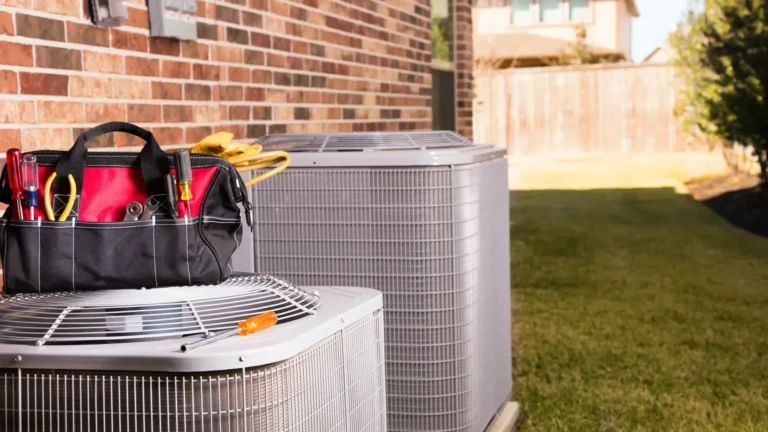
HVAC Solutions for Offices and Warehouses
Heating, ventilation, and air conditioning systems in commercial office spaces and warehouses present unique challenges that differ dramatically from residential installations. At ATS Mechanical Heating & AC, we bring 31 years of air conditioning and heating knowledge to every commercial HVAC project, ensuring that businesses across Cypress, TX, Klein, TX, Spring, TX, The Woodlands, TX, and Tomball, TX operate in environments that promote productivity, safety, and energy efficiency. Whether you manage a compact office suite or a sprawling warehouse facility, the right HVAC system is not just about comfort but about protecting inventory, retaining employees, and controlling operational costs.
Commercial buildings account for roughly 18 percent of total energy consumption in the United States, and HVAC systems represent the single largest portion of that energy use, often exceeding 40 percent of a building’s total utility expenditure. Understanding this reality drives our approach to designing, installing, repairing, and maintaining systems that balance performance with efficiency for office and warehouse environments throughout North Houston.
Understanding the Unique Demands of Office HVAC
Office environments require precise climate control that keeps employees comfortable while managing varying occupancy levels throughout the day. A conference room packed with 20 people generates significantly more heat than an empty executive suite, and a properly designed system must respond dynamically to these fluctuations. Modern office HVAC design relies on zoning strategies that segment a building into distinct climate areas, each controlled independently to match real-time demand. Variable air volume systems, programmable thermostats, and smart building automation platforms all contribute to maintaining consistent temperatures between 68 and 76 degrees Fahrenheit, which the American Society of Heating, Refrigerating and Air-Conditioning Engineers identifies as the optimal range for workplace productivity.
Indoor air quality is another critical factor in office settings. Poorly ventilated offices contribute to what the Environmental Protection Agency has termed sick building syndrome, where occupants experience headaches, fatigue, and respiratory irritation due to inadequate fresh air circulation and the accumulation of volatile organic compounds from office equipment, furniture, and building materials. We address these concerns through properly engineered ventilation systems, high-efficiency filtration, and humidity control solutions that maintain relative humidity between 30 and 60 percent. The 200 hours of training our employees go through each year keeps us sharp and updated with the newest technologies from all manufacturers, allowing us to recommend and install the most advanced air purification and ventilation solutions available today.
Warehouse HVAC Challenges and Solutions
Warehouses present an entirely different set of HVAC challenges compared to traditional office buildings. These structures often feature ceilings exceeding 30 feet, large bay doors that open frequently, minimal insulation, and vast open floor plans that make traditional heating and cooling methods impractical and prohibitively expensive. Temperature stratification becomes a major concern, where warm air rises to the ceiling while ground-level workers experience significantly cooler conditions in winter or inadequate cooling in summer months.
Effective warehouse climate control often involves a combination of technologies rather than a single system approach. Destratification fans push warm air trapped at the ceiling back down to the occupied zone, improving heating efficiency by as much as 20 to 30 percent. Radiant heating systems deliver warmth directly to people and objects at floor level rather than attempting to heat the entire air volume. Evaporative cooling systems provide cost-effective temperature reduction in warmer months without the energy demands of traditional refrigerant-based air conditioning. For warehouses storing temperature-sensitive products such as electronics, pharmaceuticals, or food items, we design and install dedicated climate control zones that maintain strict environmental parameters regardless of conditions in the surrounding space.
Combined Office and Warehouse Facilities
Many businesses in the North Houston area operate facilities that combine office space with attached warehouse or light industrial areas. These hybrid buildings require integrated HVAC strategies that address the disparate needs of each zone while operating as a cohesive system. The office portion demands tight temperature and humidity control with superior air quality, while the warehouse section may prioritize ventilation, spot cooling, and moisture management. Serving both residential and commercial customers gives us a comprehensive understanding of how different spaces interact thermally, and this knowledge serves our existing and future customers well in our ability to make them comfortable across every square foot of their facility.
Proper system design for combined facilities requires careful load calculations that account for the thermal boundary between conditioned office space and semi-conditioned warehouse areas. Without adequate separation and insulation at these transition points, conditioned air from the office bleeds into the warehouse, driving up energy costs and making it difficult to maintain consistent temperatures. We evaluate building envelope integrity, door traffic patterns, and equipment heat loads to create solutions that minimize energy waste while keeping both zones within their target parameters.
Key Considerations for Commercial HVAC Selection
Selecting the right HVAC equipment and configuration for an office or warehouse involves evaluating multiple factors that directly impact long-term performance and operating costs. Business owners and facility managers should consider the following elements when planning HVAC installations or upgrades:
- Building size and ceiling height determine the total volume of air that must be conditioned and directly influence equipment sizing and ductwork design
- Occupancy patterns affect both heating and cooling loads and determine whether variable capacity systems offer a meaningful efficiency advantage
- Inventory requirements dictate whether precise temperature and humidity control is necessary to protect stored goods from damage or spoilage
- Ventilation standards must comply with ASHRAE guidelines and local building codes to ensure adequate fresh air delivery for all occupants
- Energy efficiency ratings including SEER, EER, and AFUE values help predict long-term operating costs and potential utility rebate eligibility
- Maintenance accessibility influences ongoing service costs because rooftop units and suspended equipment require different access strategies than ground-level installations
- Future expansion plans should factor into initial system design so that additional capacity can be added without replacing core equipment
Maintenance and Repair for Commercial Systems
Commercial HVAC systems operate under heavier loads and longer run times than residential equipment, making preventive maintenance essential to avoiding costly breakdowns and premature equipment failure. A rooftop unit serving an office building might run ten to twelve hours per day, five or more days per week, accumulating significantly more wear than a home system. Warehouse units subjected to dust, debris, and temperature extremes face accelerated component degradation without regular cleaning and inspection.
Our HVAC repair services cover the full spectrum of commercial equipment, from packaged rooftop units and split systems to make-up air units and exhaust fans. As North Houston’s most trusted HVAC repair and replacement service, we understand that commercial system downtime directly translates to lost revenue and reduced employee productivity. Our technicians diagnose issues efficiently, carry common replacement parts, and communicate clearly about repair timelines so that your business operations experience minimal disruption.
Energy Efficiency and Future Trends
The commercial HVAC industry is evolving rapidly, with building electrification, heat pump technology, and smart controls reshaping how offices and warehouses approach climate management. Variable refrigerant flow systems are gaining popularity in multi-zone office buildings because they allow simultaneous heating and cooling across different zones with exceptional efficiency. Warehouse operators are increasingly adopting IoT-enabled sensors that monitor temperature, humidity, and air quality in real time, triggering system adjustments automatically and alerting facility managers to anomalies before they become problems.
We stay at the forefront of these developments through our commitment to continuous education, ensuring that every technician and installer on our team understands emerging technologies and can advise commercial clients on the most effective solutions for their specific needs. From AC installation and air conditioning service to heater repair and full system replacement, we deliver comprehensive HVAC support that keeps your office or warehouse operating efficiently today and positions your facility for the technological advances of tomorrow.