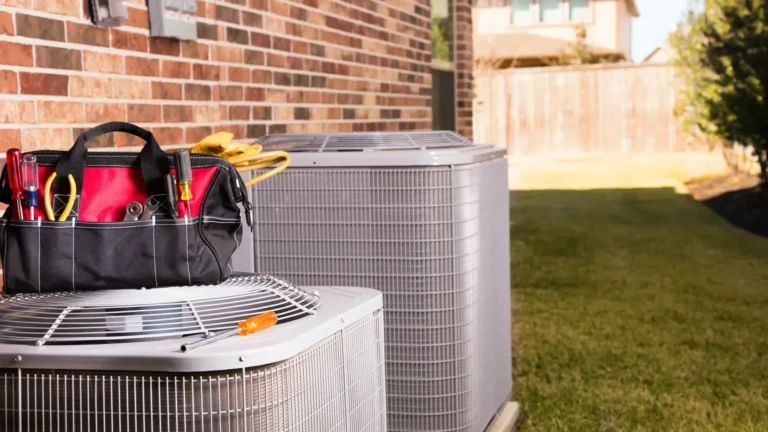
Recognizing the Natural Aging Process of HVAC Systems
Your heating and cooling system ages much like any other major home component, experiencing predictable wear patterns that affect performance, efficiency, and reliability. After years of faithful service, even well-maintained systems begin showing telltale signs of deterioration. Understanding these aging indicators helps homeowners make informed decisions about repair versus replacement, while recognizing when professional expertise becomes essential for accurate assessment. At ATS Mechanical Heating & AC, we’ve observed thousands of systems throughout their lifecycles during our 31 years of air conditioning and heating knowledge serving both residential and commercial customers across Cypress, Klein, Spring, The Woodlands, and Tomball, TX.
The typical residential HVAC system operates approximately 2,800 hours annually in Texas climates, cycling on and off hundreds of times each day during peak seasons. This constant operation creates cumulative stress on components, from electrical contacts that gradually corrode to mechanical parts that experience friction-based deterioration. Fan motors develop bearing wear, compressor valves lose their tight seal, and heat exchangers develop microscopic stress fractures that expand over time. These changes occur gradually, often imperceptibly, until performance degradation becomes noticeable through longer run times, inconsistent temperatures, or unusual sounds during operation.
Early Warning Signs That Demand Professional Attention
Aging HVAC systems communicate their declining condition through various symptoms that experienced technicians recognize immediately. Increased energy bills without corresponding usage changes often indicate declining efficiency as components work harder to maintain comfort levels. Strange noises like grinding, squealing, or rattling suggest mechanical wear in motors, bearings, or loose components vibrating during operation. Frequent cycling, where systems turn on and off more often than normal, indicates potential issues with thermostats, refrigerant levels, or control boards struggling to maintain consistent operation.
Indoor air quality changes also signal aging equipment concerns. Excessive dust accumulation, persistent humidity problems, or musty odors suggest filtration system degradation, evaporator coil issues, or drainage problems developing over time. Temperature inconsistencies between rooms often indicate ductwork deterioration, blower motor weakness, or refrigerant charge problems that worsen as systems age. Our technicians, with their 200 hours of training each year, stay current with diagnostic techniques for identifying these age-related issues across all manufacturer brands and models.
Component Lifespans and Replacement Considerations
Different HVAC components age at varying rates, creating decision points for targeted repairs versus complete system replacement. Understanding these timelines helps homeowners budget appropriately and avoid emergency situations:
- Compressors: typically last 10-15 years with proper maintenance, showing decreased cooling capacity and increased electrical consumption as they age
- Heat exchangers: generally function 15-20 years before developing cracks that pose carbon monoxide risks
- Blower motors: usually operate 10-12 years before bearing wear causes efficiency losses and noise increases
- Control boards: often fail after 7-10 years due to power surges and thermal cycling stress
- Evaporator and condenser coils: maintain effectiveness 15-20 years with regular cleaning, though corrosion eventually compromises heat transfer
Professional Experience Versus DIY Assessment
While homeowners can observe obvious aging symptoms, professional evaluation reveals hidden deterioration that affects safety, efficiency, and long-term costs. Experienced technicians use specialized instruments measuring electrical draw, temperature differentials, refrigerant pressures, and combustion efficiency to quantify system degradation precisely. We employ infrared cameras detecting hot spots in electrical connections, digital manifolds monitoring refrigerant performance, and combustion analyzers ensuring safe furnace operation.
This technical expertise proves invaluable when distinguishing between normal aging and premature failure caused by installation errors, inadequate maintenance, or environmental factors. For instance, systems in coastal areas experience accelerated coil corrosion from salt air, while units near construction sites suffer premature filter and coil contamination. Our extensive experience serving The Woodlands and surrounding communities provides insight into local environmental factors affecting system longevity.
Making Strategic Replacement Decisions
Determining optimal replacement timing involves analyzing repair costs, energy savings potential, and reliability concerns. Industry guidelines suggest considering replacement when repair costs exceed 50% of new equipment value or when systems surpass 10-12 years with major component failures. However, individual circumstances require professional assessment considering usage patterns, comfort expectations, and budget constraints.
Modern replacement systems offer substantial efficiency improvements over decade-old equipment, with SEER ratings increasing from 10-13 to current 16-20+ standards. These efficiency gains translate into significant operational savings offsetting installation investments. Additionally, newer systems incorporate advanced features like variable-speed operation, smart thermostats, and improved humidity control that enhance comfort while reducing energy consumption. Our comprehensive AC installation and HVAC installation services ensure proper sizing, configuration, and commissioning for maximum longevity and performance from replacement systems.